
Your neighbour just told you solar cost him ₦2 million. Your cousin in Lekki says her setup was ₦6 million. A vendor on Instagram is advertising a “full house solar package” for ₦900,000. All three could be telling the truth, and all three could be talking about completely different systems.
This is the confusion that stops many Nigerian homeowners from going solar. There is no single price for “solar for a 3-bedroom house” because the cost depends on what you want the system to power, what components go into it, and how long you want it to run without sunlight.
This guide breaks down the real cost of solar panels for a 3-bedroom house in Nigeria today, what determines the price, and how to avoid paying for a system that leaves you disappointed by October.
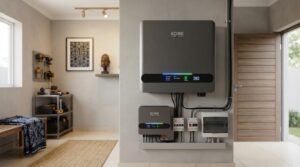
What a 3-bedroom Solar System Actually Costs in Nigeria
For a standard 3-bedroom home running lights, fans, a refrigerator, a TV, phone and laptop charging, and at least one air conditioner, most Nigerian households land in the 3.5kVA to 5kVA range. A complete, properly installed system in this range currently costs between ₦3,500,000 and ₦6,000,000, depending on battery type and component quality.
Homes with lighter loads (no AC, smaller appliances) can get by on a smaller 3kVA system for closer to ₦2,000,000 to ₦3,000,000. Homes running two or more air conditioners, an electric cooker, or a home office setup typically need 7kVA to 10kVA, which pushes the cost to ₦7,500,000 and above.
3-bedroom Solar System Cost by Capacity
| System Size | Typical Use Case | Installed Cost Range |
| 3kVA – 3.5kVA | Lights, fans, TV, fridge, charging | ₦2,000,000 – ₦3,500,000 |
| 5kVA | Above, plus 1 AC and a pumping machine | ₦3,800,000 – ₦6,000,000 |
| 7kVA – 10kVA | 2+ ACs, freezer, heavier daily use | ₦7,500,000 – ₦12,000,000 |
The wide range within each category is not vendors being dishonest. It reflects real differences in battery type, panel quality, and inverter brand, which we break down below.
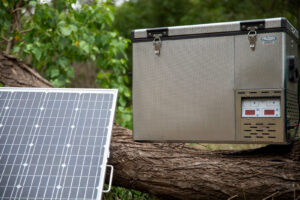
What Makes Up the Total Cost
A solar quote is never just “panels.” A full system has four major cost components, and battery storage is usually the biggest single line item.
Typical Cost Breakdown for a 5kVA System
| Component | Share of Total Cost | What It Covers |
| Batteries | 35%-45% | Lithium or tubular battery bank for night and cloudy day power |
| Panels | 25%-30% | 10 to 12 pieces of 450W–550W panels |
| Inverter | 20%-25% | Converts DC to AC, manages charging |
| Installation & Wiring | 5-15% | Mounting, cabling, protection devices, labour |
Why Batteries Cost the Most
Battery choice is the single biggest driver of price difference between two quotes for the same system size. Lithium batteries cost more upfront but last 8 to 10 years, charge faster, and let you use up to 80% of their stored capacity. Tubular (lead-acid) batteries cost less initially but typically need replacing every 3 to 5 years and only allow about 50% usable capacity, meaning you need a bigger bank to get the same real-world backup.
Over a 10 year period, lithium often works out cheaper once replacement costs are factored in, even though the upfront number looks higher.

Panel Type and Quality
Most 3-bedroom systems use 8 to 12 panels rated between 450W and 550W. Monocrystalline panels, now the market standard in Nigeria, cost more per unit than polycrystalline panels but produce more power in the same space and hold up better over 25 years. Tier-1 brands like Jinko, Canadian Solar, Trina, and LONGi carry proper 25-year performance warranties. Unbranded panels or panels with vague “German technology” stickers, despite being made elsewhere, are a common way vendors cut costs and quality at the same time.
Real Cost Example: Sizing a 5kVA System for a 3-bedroom Home
To make this concrete, here is what a typical 3-bedroom household load looks like and what it costs to power reliably.
Sample Daily Load
- Refrigerator: 150W × 24 hours = 3.6 kWh
- 1 Inverter AC (bedroom): 1,200W × 6 hours = 7.2 kWh
- Ceiling fans (3 units): 75W × 10 hours = 2.25 kWh
- LED lighting (8 bulbs): 10W × 6 hours = 0.48 kWh
- TV: 100W × 5 hours = 0.5 kWh
- Phone and laptop charging: 50W × 4 hours = 0.2 kWh
- Water pump: 750W × 1 hour = 0.75 kWh
Total daily consumption: roughly 15 kWh
A 5kVA system with 10 to 12 panels (450W–550W) and a 5kWh to 10kWh lithium battery bank comfortably covers this load on most days, including one AC running through the evening. This is the sweet spot most 3-bedroom homes land on, and it typically installs for ₦3,800,000 to ₦6,000,000 depending on battery size and panel brand.
Households that add a second AC or run heavier appliances during the day should size up to 7kVA rather than push a 5kVA system past its comfortable limit. Undersizing is the most common reason homeowners end up disappointed with solar, especially once rainy season output drops.
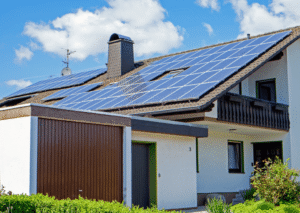
Factors That Push Your Cost Up or Down
Appliances You Actually Run
Air Conditioners and electric cookers are the biggest load drivers. A home with two ACs running daily needs roughly double the battery and panel capacity of a home wth none, which can shift total cost by ₦2,000,000 to ₦4,000,000.
Battery Capacity and Backup Hours
More backup hours mean more batteries, and batteries are already the largest cost component. Homes that want full overnight AC use need significantly more storage than homes that just want lights and a fridge to run through the night.
Location and Season
The naira-to-dollar exchange rate affects panel and inverter prices directly, since most components are imported. Rural or hard-to-reach locations also add to installation and logistics cost. Beyond price, your city affects how many panels you actually need. A Lagos or Port Harcourt home needs more panel capacity than an Abuja or Jos home to produce the same usable power, because of longer rainy seasons and lower peak sun hours.
Installer Quality
Two vendors quoting the “same” 5kVA system can differ by ₦1,000,000 or more once you compare panel brand, battery type, inverter quality, and workmanship. The cheapest quote is rarely the cheapest system over 10 years, once battery replacement and repair costs are added in.

Myth vs Fact: Solar Pricing in Nigeria
Myth: A cheap quote means you’re getting a good deal.
Fact: Vendors cut cost by using undersized batteries, unbranded panels, or lead-acid batteries with short lifespans. A system that looks ₦1,000,000 cheaper today can cost more over 5 years once you factor in battery replacement and lost reliability.
Myth: One system size fits every 3-bedroom house.
Fact: A 3-bedroom home with no AC and one with two ACs have completely different loads. Sizing should always follow your actual appliance list, not a generic “3-bedroom package.”
Myth: Solar is a one-time cost with nothing after.
Fact: Lithium batteries need little maintenance for years. Tubular batteries and panels still need periodic cleaning, and batteries eventually need replacement, so factor that into long-term budgeting.
How to Get an Accurate Quote
Before accepting any quote, make sure it specifies: the exact panel wattage and brand, battery type and total kWh capacity, inverter brand and kVA rating, and what’s included in installation (mounting, wiring, protection devices). A vague quote that just says “5kVA system, ₦4.5 million” without these details makes it impossible to compare against other vendors.
At GVE Group, we size every system around your actual appliance list and your city’s rainy season production, not generic averages, so your 3-bedroom system is built to perform in August, not just March. You can use GVE’s Energy Calculator to get a load estimate before requesting a quote, or contact GVE directly for a site assessment.
Frequently Asked Questions
How much does it cost to install solar panels for a 3-bedroom house in Nigeria?
A complete 3-bedroom solar system typically costs between ₦3,500,000 and ₦6,000,000 for a 3.5kVA to 5kVA setup covering lights, fans, a fridge, TV, charging, and one air conditioner. Lighter loads without AC can cost as low as ₦2,000,000, while homes running multiple ACs or heavier appliances often need ₦7,500,000 or more.
How many solar panels do I need for a 3-bedroom flat?
Most 3-bedroom flats in Nigeria need 8 to 12 panels rated between 450W and 550W, paired with a 3.5kVA to 5kVA inverter. The exact number depends on your daily appliance usage and your city’s seasonal sunlight patterns.
What size inverter do I need for a 3-bedroom house?
A 5kVA inverter is the standard choice for a 3-bedroom home running a fridge, fans, lights, TV, and one air conditioner. Homes with lighter loads can use 3kVA to 3.5kVA, while homes with heavier daily use may need 7kVA or more.
Is lithium or tubular battery better for a 3-bedroom solar system?
Lithium batteries cost more upfront but last 8 to 10 years and allow deeper usable capacity, which often makes them cheaper over the system’s lifetime. Tubular batteries cost less initially but typically need replacing every 3 to 5 years, adding to long-term cost.
How long does it take for solar to pay for itself in Nigeria?
Most properly sized 3-bedroom solar systems pay for themselves in 3 to 4 years compared to running a generator, based on current fuel prices. After that, homeowners typically save well over ₦1,000,000 annually on fuel and generator maintenance.
Does the cost of solar panels change with the season in Nigeria?
Panel and component prices don’t change with season, but system sizing should. A system sized only for dry season production will underperform once rainy season peak sun hours drop, so GVE always sizes systems around rainy season output to avoid shortfalls.