
Imagine a hospital losing grid power in the middle of a busy night. Essential equipment needs electricity, staff must keep working, medicines may require reliable refrigeration, and patients cannot wait for power to return. In Nigeria, where many healthcare facilities face electricity supply challenges, dependable energy is vital for safe and continuous care. The World Health Organization highlights the importance of reliable electricity for health services, including lighting, diagnostics, communications, and emergency care. This makes solar energy for hospitals in Nigeria an important consideration for healthcare providers seeking more dependable power.
However, choosing a solar system for a hospital requires more than installing panels on the roof. Poor system sizing, insufficient battery storage, and unreliable equipment can leave critical areas without the power they need. Hospitals also face high energy costs from air conditioning, laboratory equipment, lighting, water pumps, and medical devices. Without careful planning, a system may struggle to support these demands, especially at night or during cloudy weather. Healthcare managers therefore need solutions that match their facility’s energy use, backup requirements, and budget. This is where a well-planned Nigeria solar for health project can make a practical difference.
At GVE Group, we understand that healthcare facilities need energy solutions designed around their operational requirements. Our renewable energy expertise supports the development of solar solutions for different applications, including commercial and community energy needs. In this guide, we explore the best solar solutions for hospitals in Nigeria, the equipment healthcare facilities should consider, the factors affecting installation costs, and how to choose a suitable provider. Explore GVE Group’s energy solutions to learn how a properly designed solar system can support more reliable power for healthcare services.
Common Energy Challenges in Healthcare Facilities
Power Interruptions and Patient Care
Power outages can interrupt routine operations and affect essential services. Hospitals need suitable backup arrangements to keep critical equipment and designated areas powered during interruptions.
High Electricity and Generator Costs
Hospitals often use electricity throughout the day and night. Running generators can add fuel, servicing, and repair expenses. A well-designed solar system may reduce generator use and help control operating costs.
Protecting Medical Equipment and Refrigerated Medicines
Sensitive medical devices and temperature-controlled medicines need suitable power conditions. Hospitals should use properly designed electrical systems, backup arrangements, and protection equipment to reduce the risk of disruptions or electrical faults.
Types of Solar Solutions for Hospitals in Nigeria
The right system depends on the facility’s location, energy demand, grid access and backup requirements.
Solar Systems with Battery Storage
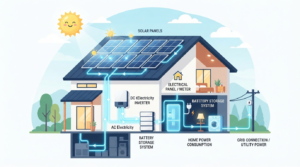
These systems store energy produced during sunny periods for use later, including at night or during grid outages. They can support selected hospital loads, depending on system capacity.
Hybrid Solar Systems
Hybrid systems combine solar panels and batteries with another power source, such as the public grid or a generator. They offer flexibility and can reduce generator runtime when solar energy meets part of the hospital’s demand.
Off-Grid Solar Systems for Remote Health Facilities
Off-grid systems operate without relying on the public grid. They can suit rural clinics and healthcare centres with limited electricity access, provided the system has enough generation and storage capacity for the facility’s needs.
Solar Mini-Grids for Rural Healthcare Centres
A solar mini-grid can supply electricity to multiple customers within a defined area, potentially including health centres and nearby communities. In Nigeria, projects that qualify as mini-grids must meet applicable requirements under the Nigerian Electricity Regulatory Commission’s Mini-Grid Regulations 2026.

Essential Components of a Hospital Solar System
Solar Panels and Inverters
Solar panels convert sunlight into electricity, while inverters convert the panels’ direct-current output into alternating current for compatible equipment. The system design must account for the facility’s electrical loads and the specifications of its equipment.
Battery Storage for Backup Power
Batteries store energy for use when solar production falls, or the grid fails. Their capacity should reflect the critical equipment the hospital needs to support and the required backup duration.
Energy Monitoring and Protection Systems
Monitoring equipment helps facility managers track energy production, consumption, and system performance. Suitable electrical protection, isolation and earthing also help protect people and equipment. A qualified professional should design and assess these systems.
Healthcare facilities can consult the Nigerian Electricity Management Services Agency (NEMSA) for information on electrical installation certification, technical standards, and inspection services.
How to Choose the Right Solar System for a Hospital
Assessing Medical Equipment and Daily Energy Demand
Start with an assessment of the facility’s electricity use, including lighting, laboratory equipment, refrigeration, water pumps, air conditioning, and other essential loads. Operating hours and peak demand also affect system size.
Prioritising Critical Hospital Loads
Identify the services that need reliable backup, such as essential medical equipment, emergency lighting and medicine refrigeration. The system design should clearly account for these priorities rather than assume every appliance can run at once.
Determining Battery Backup Requirements
Battery storage should match the critical loads and the length of backup required. Hospitals that need continuous power for essential equipment may also require additional backup arrangements designed by qualified professionals.
Planning for Future Expansion
Consider whether the hospital may add beds, wards, diagnostic equipment, or other services. Planning for future demand can help avoid expensive redesigns later.
GVE Group offers residential, commercial, and industrial solar solutions. Healthcare providers can discuss their facility’s requirements with an experienced provider to determine a suitable approach for reliable power.
Cost of Solar Energy for Hospitals in Nigeria
The cost of solar energy for hospitals in Nigeria depends on the facility’s size, electricity demand, backup requirements, and equipment choices. A small clinic may need a modest system, while a large hospital may require a more extensive installation to support its operations.
Factors That Affect Installation Costs
Several factors influence the total project cost, including the number of solar panels, inverter capacity, battery storage, installation complexity and the hospital’s existing electrical infrastructure. Remote locations may also require additional transport and installation arrangements.
Battery Storage and Equipment Expenses
Batteries can account for a significant share of the budget, particularly for hospitals that need backup power overnight. The choice of panels, inverters, batteries, monitoring equipment and electrical protection also affects the final cost.
Long-Term Savings and Maintenance Costs
Solar power can reduce generator fuel consumption and grid electricity use, depending on system performance and operating patterns. However, hospitals should budget for inspections, cleaning, repairs and eventual battery replacement. A professional assessment can help estimate the project’s total cost and potential savings.
How to Choose a Solar Installation Company for a Hospital
Hospital solar projects require careful planning because different departments have different electricity needs. We recommend choosing a provider with relevant technical experience, suitable equipment, and reliable maintenance support.
Healthcare Project Experience and Technical Expertise
Look for a company that understands the energy demands of healthcare facilities. Your provider should be able to assess critical equipment, backup power requirements, system monitoring, and electrical safety. Ask about relevant projects and the technical team responsible for the installation.
Equipment Quality and Warranty
Before approving a proposal, request a clear list of the recommended solar panels, inverters, batteries, and protection equipment. Review their specifications, warranty terms, and expected service life. We believe equipment selection should reflect your facility’s power requirements and long-term needs, not just the initial installation cost.
Maintenance and After-Sales Support
A hospital needs a solar system that remains dependable after installation. Confirm the provider’s arrangements for inspections, fault diagnosis, repairs, and replacement parts. You should also establish whether technical documentation and staff training form part of the project.

Why Choose GVE Group for Hospital Solar Solutions?
At GVE Group, we provide renewable energy solutions for residential, commercial, industrial, and community applications across Nigeria. Our experience in solar energy projects supports our work with organisations seeking more dependable electricity solutions.
For healthcare facilities, we recognise the importance of assessing energy demand, identifying critical loads, and planning appropriate backup capacity before recommending a system. We encourage hospitals to discuss their operational requirements with our team so we can explore suitable solar energy options for their facilities.
Explore our solar and energy solutions to learn more about our services and how we support different energy needs.
Frequently Asked Questions
Can Solar Power Run a Hospital 24 Hours a Day?
Yes, a properly designed system can supply a hospital around the clock if its generation capacity, battery storage, and backup arrangements meet demand. Critical medical loads require careful planning and suitable contingency power.
Which Solar System Is Suitable for a Small Clinic?
A small clinic may benefit from a solar system with battery storage, sized for its essential loads. The final design should reflect its equipment, operating hours, and backup needs.
How Long Can Hospital Batteries Provide Backup Power?
Backup time depends on battery capacity, battery condition, and the amount of electricity the hospital uses. A qualified designer should calculate the required storage for the facility’s critical loads.
Can Solar Power Support Laboratory and Diagnostic Equipment?
Yes, if the system can meet the equipment’s power requirements. The design should account for starting loads, operating demand, power quality, and the manufacturer’s specifications.