
Power outages often happen when they are least expected, leaving families worried about spoiled food, wasted groceries, and rising electricity costs. That is why many Nigerians are searching for answers to questions like which solar can carry fridge and how many solar panels are needed to keep a refrigerator running reliably. According to the International Energy Agency (IEA), access to reliable electricity remains a major challenge across many parts of Africa, making alternative energy solutions increasingly important. A properly designed solar system can keep a fridge running efficiently while reducing dependence on the grid and expensive generator fuel.
Many homeowners and business owners invest in solar without fully understanding the power requirements of their refrigerator. Some end up buying systems that are too small, leading to battery drain and poor performance. Others spend more than necessary on oversized systems. Refrigerator size, energy efficiency rating, daily usage, battery capacity, inverter size, and available sunlight all play important roles in determining which solar can carry a fridge effectively. A wrong calculation can lead to unnecessary expenses and unreliable cooling when it matters most.
This guide explains everything you need to know about powering a fridge with solar energy. You will learn how many solar panels are required for different refrigerator sizes, how batteries and inverters affect performance, and the factors that influence daily energy consumption. GVE Group helps homes, businesses, and communities design reliable solar systems tailored to their actual energy needs, ensuring long-term savings, dependable power, and peace of mind. Whether you need to power a small household refrigerator or multiple commercial cooling units, this guide will help you make an informed decision.
Which Solar Can Carry a Fridge? Quick Answer for Homeowners
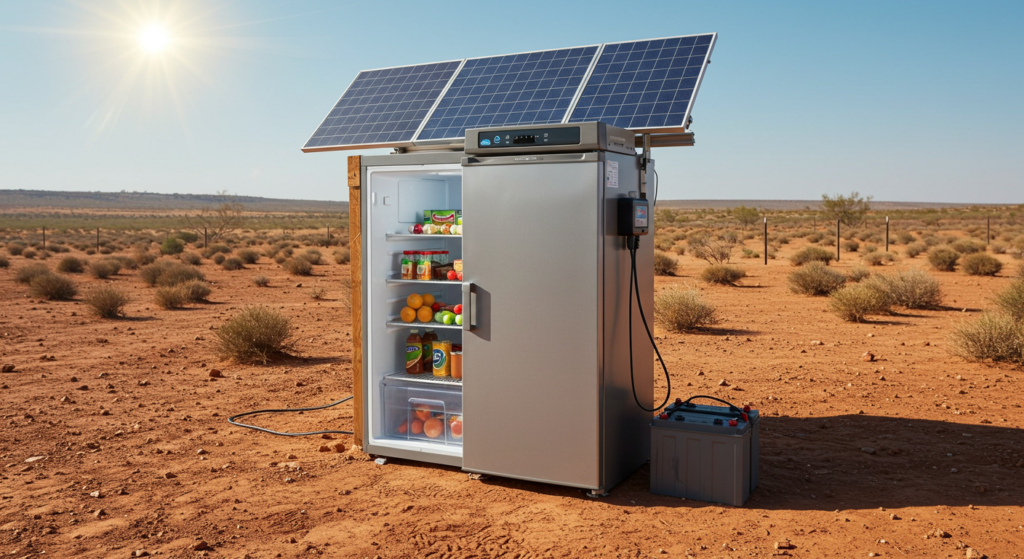
Many homeowners ask, which solar can carry a fridge without interruption. The answer depends on the size of the refrigerator, its daily energy consumption, the battery capacity, and the amount of sunlight available. Most household refrigerators in Nigeria can run efficiently on a solar system consisting of solar panels, a battery bank, and an inverter. Thus, the different refrigerator sizes required for different solar capacities include;
| Fridge Type | Daily Energy Use | Recommended Solar Panels |
| Mini Fridge | 0.5–1 kWh | 1 × 300W Panel |
| Small Household Fridge | 1–1.5 kWh | 2 × 300W Panels |
| Medium Household Fridge | 1.5–2.5 kWh | 2–3 × 300W Panels |
| Large Double-Door Fridge | 2–4 kWh | 3–4 × 300W Panels |
Actual requirements may vary depending on the refrigerator’s energy rating and usage pattern.
Solar Requirement for Mini Refrigerators
Mini refrigerators are among the easiest appliances to power with solar. Most consume between 0.5 kWh and 1 kWh of electricity daily.
In many cases, one 300W solar panel combined with a suitable battery and inverter can support a mini fridge. Energy-efficient models may require even less power.
Solar Requirement for Single-Door Refrigerators
Single-door refrigerators are common in Nigerian homes and usually consume between 1 kWh and 2 kWh daily.
Most households require:
- 2 × 300W solar panels, or
- 1 × 550W solar panel
A battery system is necessary to keep the refrigerator running after sunset and during periods of low sunlight.
Solar Requirement for Double-Door Refrigerators
Double-door refrigerators generally have larger compressors and higher energy consumption.
A typical setup may include:
- 3 to 4 solar panels rated between 300W and 550W
- A larger battery bank
- A quality inverter capable of handling compressor startup power
Proper sizing helps prevent frequent battery depletion and system overload.
Solar Requirement for Commercial Refrigerators
Commercial refrigerators used in supermarkets, restaurants, pharmacies, and cold rooms often operate continuously.
These systems may require:
- Multiple high-capacity solar panels
- Large lithium battery storage
- Commercial-grade hybrid inverters
Professional energy audits are strongly recommended before installation. Companies such as GVE Group help businesses design systems based on actual energy consumption rather than estimates.
Average Solar Requirements for Nigerian Households
Many Nigerian homes use refrigerators alongside lights, televisions, fans, and internet devices. A typical household may require:
- 600W–1,200W of solar panels
- 200Ah–300Ah lithium battery
- 1.5kVA–3kVA inverter
Nigeria receives strong solar radiation throughout most parts of the country, making solar refrigeration practical for both urban and rural households. According to the Nigerian Meteorological Agency (NiMet), most regions receive sufficient sunshine throughout the year to support solar energy generation.

Typical Solar Setup for Continuous Refrigeration
A complete refrigerator solar system usually includes:
- Solar panels for electricity generation
- Lithium or deep-cycle batteries for energy storage
- Pure sine wave inverter for stable power output
- Charge controller for battery protection
Continuous refrigeration requires battery storage because solar panels only generate electricity during daylight hours. Proper system sizing helps prevent food spoilage during grid failures.
Businesses and homeowners seeking professionally designed systems can work with GVE Group for customized solar solutions tailored to appliance loads and energy needs.
What Is Your Refrigerator’s Power Consumption? Understand It Before Choosing Solar
Selecting the right solar system starts with understanding how much electricity your refrigerator uses. This information helps prevent under-sizing or over-sizing your solar installation.
Refrigerator Wattage Explained
Wattage measures how much power a refrigerator needs to operate.
Most refrigerators consume between:
- 100W–300W while running
- Up to 600W–1,500W during startup
Energy-efficient refrigerators generally use less electricity and require smaller solar systems.
The power rating can usually be found on:
- Manufacturer labels
- Product manuals
- Energy information stickers
Difference Between Running Watts and Starting Watts
Two power figures are important when sizing solar systems:
| Power Type | Meaning |
| Running Watts | Power needed during normal operation |
| Starting Watts | Extra power needed when the compressor starts |
The compressor often requires two to three times more power for a few seconds during startup. An inverter must be large enough to handle this surge.
How Fridge Size Affects Power Consumption
Larger refrigerators generally consume more electricity than smaller models.
Several factors affect consumption:
- Storage capacity
- Age of the appliance
- Compressor efficiency
- Frequency of door opening
- Ambient room temperature
Modern inverter refrigerators often use less electricity than older conventional models, reducing the size of the solar system required.
How to Calculate the Right Solar Size for Your Refrigerator
A simple calculation can help determine the appropriate solar system size for reliable refrigerator operation.
You can also use our Solar Energy Calculator in the link below to make the calculation easy
Step 1: Check Your Fridge Energy Consumption
Start by identifying the refrigerator’s daily energy usage.
Look for:
- Annual kWh rating on the appliance label
- Manufacturer specifications
- Energy guide documentation
Example:
600 kWh per year ÷ 365 days = 1.64 kWh per day
This means the refrigerator consumes approximately 1,640Wh daily.
Step 2: Determine Daily Sunlight Hours in Nigeria
Solar production depends on available sunshine.
Many parts of Nigeria receive between 4.5 and 6.5 peak sun hours daily according to data published by the International Renewable Energy Agency (IRENA).
Also Read Can Solar Panels Work on Cloudy Days? Explained Clearly
Higher sunlight levels mean fewer solar panels may be required to produce the same amount of electricity.
Step 3: Calculate Total Solar Power Required
After determining daily energy consumption, divide that value by average peak sunlight hours.
Example:
1,640Wh ÷ 5 hours = 328W
System losses should also be considered. Industry experts often add 15%–25% extra capacity for reliability.
328W × 1.2 = 394W
A practical recommendation would be approximately 400W–600W of solar panels.
Simple Formula for Sizing a Solar System for a Fridge
Use this formula:
Solar Panel Size (W) = Daily Energy Consumption (Wh) ÷ Peak Sun Hours × 1.2
Example:
- Daily Consumption = 2,000Wh
- Peak Sun Hours = 5
Calculation:
2,000 ÷ 5 × 1.2 = 480W
A 500W solar array would comfortably support the refrigerator under normal conditions.
Professional load assessment remains the most accurate way to determine system size. GVE Group helps homeowners and businesses design solar systems that match appliance loads, battery requirements, and future energy needs, ensuring reliable performance throughout the year.
Choosing the Right Battery Capacity for Reliable Refrigerator Operation
Solar panels generate electricity during the day, but batteries ensure your refrigerator continues running at night and during cloudy weather.
Why Batteries Are Essential for Night-Time Operation
A refrigerator operates 24 hours a day even though the compressor cycles on and off. Without battery storage, cooling will stop once solar production ends in the evening.
Battery storage improves reliability and protects food, beverages, medicines, and other temperature-sensitive items.
Recommended Battery Capacity for Different Fridge Sizes
| Fridge Type | Recommended Battery Size |
| Mini Fridge | 100Ah Lithium Battery |
| Single-Door Fridge | 150Ah–200Ah Lithium Battery |
| Double-Door Fridge | 200Ah–300Ah Lithium Battery |
| Commercial Refrigerator | Custom Commercial Battery Bank |
Actual battery requirements vary depending on daily energy consumption and backup hours required.
Lithium vs Tubular Batteries for Refrigerators
Lithium batteries are becoming the preferred option because they charge faster, last longer, require less maintenance, and provide deeper discharge cycles.
Tubular batteries usually have a lower upfront cost but often require more maintenance and replacement over time.
The Nigerian government continues to support renewable energy growth through the provisions of the Electricity Act 2023, which encourages private investment and decentralized electricity solutions.
Common Mistakes People Make When Sizing Solar for a Fridge
Many solar systems fail not because solar technology is unreliable but because the system was incorrectly sized.
#1. Ignoring Compressor Startup Power
Most refrigerators require significantly more power when the compressor starts than during normal operation.
A fridge that runs at 200W may briefly require 600W or more during startup. An undersized inverter can shut down or trip repeatedly.
#2. Choosing Too Small a Battery
Some homeowners focus only on panel size and forget about storage capacity.
An undersized battery may power the refrigerator during the day but fail overnight, resulting in food spoilage and unnecessary battery stress.
#3. Not Accounting for Future Appliances
Many people later add televisions, fans, routers, lights, or freezers to the same system.
Solar systems should allow room for future expansion whenever possible.
#4. Buying Low-Quality Solar Components
Cheap panels, batteries, cables, and inverters often lead to poor performance and frequent failures.
Quality-certified equipment usually provides better efficiency, longer lifespan, and stronger warranty protection.
![10 Best Solar Companies in Lagos [Updated]](https://gve-group.com/wp-content/uploads/2026/02/image-300x150.png)
How GVE Group Designs Reliable Solar Solutions for Nigerian Homes and Businesses
Every refrigerator has different energy requirements. A system that works for one household may not work for another.
GVE Group evaluates energy consumption, sunlight availability, battery requirements, and future expansion needs before recommending a solution. This approach helps homeowners and businesses install solar systems that deliver dependable power while reducing long-term energy costs.
Frequently Asked Questions
Can a 300W Solar Panel Run a Refrigerator?
Yes. A 300W solar panel can run many small and medium-sized refrigerators when combined with battery storage. Performance depends on daily sunlight hours and refrigerator power consumption.
How Many Batteries Do I Need for a Fridge?
Most residential refrigerators require at least one battery. Larger refrigerators or longer backup periods may require multiple batteries depending on system design.
Can Solar Run a Refrigerator 24 Hours a Day?
Yes. A properly designed solar system with adequate battery storage can keep a refrigerator running day and night throughout the year.
What Size Inverter Is Best for a Refrigerator?
Most household refrigerators work well with a pure sine wave inverter rated between 1kVA and 2kVA. Larger refrigerators may require higher-capacity inverters.
Can Solar Power a Fridge During a Blackout?
Yes. Solar systems with batteries can continue supplying electricity during grid outages, allowing the refrigerator to keep operating normally.