
Imagine running a business in a Nigerian community where electricity disappears for days. Your customers leave, food spoils, and generator fuel consumes your profits. A solar mini grid can change that experience. According to the World Bank, over 85 million Nigerians lacked electricity access in 2021, highlighting the urgent need for reliable power solutions, especially in underserved communities.
For many rural households and businesses, unreliable electricity limits productivity, healthcare, education, and economic growth. Extending the national grid often takes years and demands substantial investment. Meanwhile, individual solar installations may struggle to meet an entire community’s energy needs, leaving residents searching for affordable, shared power solutions.
This guide explains how solar mini-grids work, their benefits, costs, and potential for Nigerian communities. Discover how we support rural electrification through sustainable solar energy solutions.

What Is a Solar Mini-Grid?
A solar mini grid provides electricity to multiple homes, businesses, and public facilities through a shared solar power system. Unlike individual rooftop solar installations, a mini-grid generates and distributes electricity across a community using a local distribution network.
Solar mini-grids offer a practical solution for rural and underserved communities in Nigeria, especially where extending the national electricity grid would require substantial investment.
For example, a community with 100 households can use a centrally installed solar mini-grid to power homes, shops, schools, and healthcare centres. However, the system’s capacity must match the community’s actual electricity demand.
The Nigerian Electricity Regulatory Commission (NERC) provides a regulatory framework for mini-grid development, while the Rural Electrification Agency (REA) supports rural electrification projects across Nigeria.
How Does a Solar Mini-Grid Work?
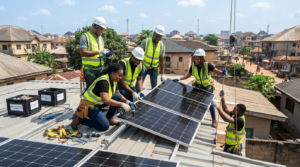
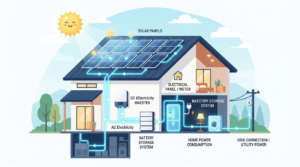
A solar mini grid converts sunlight into electricity and distributes the power to connected users through a local electricity network.
During daylight hours, solar panels generate electricity for immediate consumption. When production exceeds demand, the system can store surplus energy in batteries. At night or during periods of low sunlight, batteries supply electricity to connected households and businesses.
Some mini-grids also use generators or grid connections to provide additional power when necessary.
The process follows five main steps:
- Solar panels capture sunlight and generate direct current (DC) electricity.
- Inverters convert electricity from DC to alternating current (AC), which powers most household and commercial appliances.
- Battery systems store excess energy for use when sunlight becomes unavailable.
- Distribution networks deliver electricity to connected homes, businesses, and community facilities.
- Smart meters monitor consumption and help operators manage electricity usage and customer payments.
Key Components of a Solar Mini-Grid
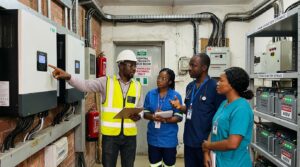
Each component plays an important role in maintaining reliable electricity supply.
| Component | Function |
| Solar panels | Generate electricity from sunlight |
| Inverters | Convert DC electricity into usable AC power |
| Battery storage | Store energy for nighttime and backup use |
| Charge controllers or energy management systems | Manage energy flow and protect system components |
| Distribution network | Deliver electricity to connected users |
| Smart meters | Measure consumption and support electricity billing |
| Backup generators (optional) | Provide additional electricity when required |
A properly designed system balances generation, storage, and electricity demand to maintain dependable performance.
Types of Solar Mini-Grids in Nigeria
Solar mini-grids generally fall into different categories depending on their connection to the national grid and the technologies they use.
#1. Isolated Solar Mini-Grids
Isolated mini-grids operate independently of the national electricity grid. They provide electricity to communities without access to conventional grid infrastructure.
Developers commonly consider these systems for remote villages, agricultural settlements, and underserved rural communities.
#2. Interconnected Solar Mini-Grids
Interconnected mini-grids operate alongside an existing electricity distribution network. They can help improve electricity supply in communities that already have grid connections but experience unreliable service.
Developers must coordinate with the relevant distribution company and comply with applicable regulatory requirements.
#3. Hybrid Solar Mini-Grids
Hybrid mini-grids combine solar panels with other electricity sources, such as diesel generators or additional renewable technologies.
For example, a solar-battery-diesel hybrid system can use solar power during the day, battery storage at night, and a generator when demand exceeds available renewable energy.
Hybrid systems can operate as isolated or interconnected mini-grids, depending on their design.
Nigeria’s NERC Mini-Grid Regulations 2023 provide rules for qualifying mini-grid projects, including applicable registration, permitting, and operational requirements.
Benefits of Solar Mini-Grids for Nigerian Communities
Solar mini-grids do more than supply electricity. They create opportunities for economic growth, improved public services, and better living conditions, particularly in communities with limited access to reliable power.
#1. Improve Electricity Access in Rural Communities
Solar mini-grids can bring electricity to locations where national grid expansion faces financial or geographical challenges. Residents gain access to lighting, phone charging, refrigeration, and other essential services.
#2. Support Small Businesses and Local Employment
Reliable electricity helps tailors, welders, barbers, and other business owners operate equipment more consistently.
It also creates opportunities for local technicians, system operators, and maintenance workers.
#3. Strengthen Healthcare and Education
Health centres can use electricity for lighting, refrigeration, and essential medical equipment, provided the system meets their power requirements.
Similarly, schools can support computer learning, lighting, and other educational activities.
#4. Reduce Dependence on Diesel and Petrol Generators
Solar mini-grids can reduce generator operating hours, fuel consumption, and local air pollution.
According to the International Energy Agency (IEA), expanding access to modern energy technologies plays an important role in improving living conditions and supporting sustainable development across Africa.
#5. Support Agriculture and Food Preservation
Farmers and agricultural businesses can use mini-grid electricity for irrigation pumps, grain processing, refrigeration, and cold storage.
These applications can help reduce post-harvest losses and support local agricultural businesses.
#6. Encourage Community Development
Reliable electricity can attract businesses, improve communication, and extend productive activities beyond daylight hours.
For communities planning long-term electrification, our organization GVE Projects Limited provides experience in renewable energy development and solar mini-grid solutions that can support local energy needs.
How Much Does a Solar Mini-Grid Cost in Nigeria?
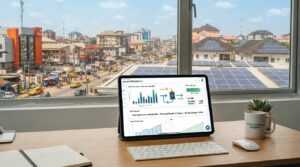
The cost of developing a solar mini grid in Nigeria depends on the system’s capacity, number of customers, battery storage requirements, and location. Unlike residential solar installations, mini-grid projects require additional investment in electricity distribution, metering, engineering, and community infrastructure.
Developers typically calculate costs based on the electricity demand they intend to serve rather than the number of solar panels alone.
Factors That Affect Solar Mini-Grid Installation Costs
| Cost factor | How it affects your budget |
| System capacity | Higher electricity demand requires more generation equipment |
| Battery storage | Longer backup hours increase battery capacity and investment |
| Distribution infrastructure | Poles, cables, transformers, and connections add construction expenses |
| Project location | Remote communities may face higher transport and logistics costs |
| Smart metering | Customer meters and payment systems require additional investment |
| Operations and maintenance | Routine servicing, repairs, and future equipment replacement affect long-term costs |
For context, the World Bank’s ESMAP has published research on mini-grid development costs and the potential for cost reductions through scale and improved technology. However, international cost benchmarks cannot replace a project-specific quotation in Nigeria.
Developers should conduct a feasibility study, estimate community electricity demand, and prepare a detailed financial model before approving construction.
Challenges of Solar Mini-Grid Development in Nigeria
Solar mini-grids can improve electricity access, but developers must overcome several financial, technical, and operational challenges.
- High initial investment: Solar equipment, batteries, distribution infrastructure, and installation require substantial capital before customers begin paying for electricity.
- Limited access to financing: High borrowing costs and foreign exchange fluctuations can make project funding difficult.
- Uncertain electricity demand: Some communities may initially consume less electricity than developers forecast, affecting project revenue.
- Customer affordability: Developers must balance sustainable electricity tariffs with what households and small businesses can afford.
- Maintenance and technical support: Remote locations may lack trained technicians and easy access to replacement components.
- Community engagement: Land access, customer expectations, and payment arrangements require early discussions with local stakeholders.
Successful projects address these challenges during planning rather than waiting until construction begins. Accurate demand assessments, community participation, and realistic financial projections can improve long-term performance.
Government Policies and Regulations for Solar Mini-Grids in Nigeria
Nigeria has introduced laws and policies to encourage private investment in renewable energy and expand electricity access to underserved communities. However, developers must follow the appropriate regulatory procedures before constructing or operating a solar mini grid.
#1. Electricity Act 2023
The Electricity Act 2023 allows state governments to establish and regulate electricity markets within their jurisdictions.
This creates opportunities for private developers to invest in local electricity generation and distribution. Depending on the project’s location, developers may need approval from NERC or the relevant state electricity regulator.
nerc.gov.ng
#2. NERC Mini-Grid Regulations 2026
The NERC Mini-Grid Regulations 2026 establish requirements for mini-grid registration, permits, electricity tariffs, consumer protection, and technical compliance.
The regulations provide different approval routes:
| Project category | Regulatory requirement |
| Isolated mini-grid up to 100 kW | Registration or permit |
| Isolated mini-grid above 100 kW and up to 5 MW | Permit |
| Interconnected mini-grid up to 10 MW | Permit and agreement with the relevant parties |
Developers must also meet applicable safety, environmental, and customer protection requirements.
#3. Rural Electrification Agency Programmes
The Rural Electrification Agency (REA) supports electricity access through rural electrification initiatives, including programmes that encourage private investment in mini-grids.
Developers can explore relevant funding opportunities and programme requirements through the agency. However, eligibility, funding availability, and application conditions depend on the specific programme.
#4. Electrical Safety and Technical Standards
The Nigerian Electricity Management Services Agency (NEMSA) oversees electrical safety inspections, testing, and technical compliance.
Mini-grid developers must consider equipment standards, installation quality, and applicable certification requirements before energising their systems.
How GVE Supports Solar Mini-Grid Development in Nigeria
Developing a successful solar mini-grid requires technical expertise, financial planning, and an understanding of community electricity needs.
We bring experience in renewable energy development and rural electrification to support communities, businesses, and organisations seeking reliable electricity solutions.
Our relevant capabilities include:
- Project feasibility and planning: Assess community electricity demand, project viability, and technical requirements.
- Engineering and system design: Develop solar mini-grid solutions that match expected electricity consumption.
- Solar infrastructure development: Support the installation of generation equipment, battery storage, and distribution infrastructure.
- Smart metering solutions: Help operators monitor electricity consumption and manage customer billing.
- Energy consultancy: Provide technical guidance for organisations exploring decentralised renewable energy projects.
Our experience in renewable energy projects makes us a relevant partner for communities and organisations considering solar mini-grid development.
Looking to develop a solar mini-grid in Nigeria? Visit GVE Projects Limited to explore its renewable energy solutions and discuss your project’s requirements.
Frequently Asked Questions About Solar Mini-Grids in Nigeria
How many homes can a solar mini-grid power?
The number depends on the system’s capacity and each household’s electricity consumption. A properly designed mini-grid can serve dozens or hundreds of homes, depending on demand and available infrastructure.
Can a solar mini-grid provide electricity 24 hours a day?
Yes, a properly sized system with sufficient battery storage or backup generation can support continuous electricity supply. However, actual reliability depends on system design, weather conditions, maintenance, and customer demand.
What happens when the national grid reaches a mini-grid community?
The operator may explore interconnection, asset transfer, or another approved arrangement. The NERC Mini-Grid Regulations 2026 provide procedures and protections for managing national grid expansion into mini-grid service areas.